Most guides to spotting fake watches are written for people who've never seen one up close, focused on the obvious stuff that anyone with two minutes of research would already know. This isn't that guide. This is for the buyer who has done the research, knows the basics, and still wants to know where the real risk lives when buying pre-owned.
Because the fakes that circulate today aren't the obvious tourist-market junk. They're sophisticated, expensive to produce, and specifically designed to fool people who know what they're looking for. If you buy on secondary markets regularly, you will encounter them. Here's what still gives them away.
Start With the Listing, Not the Watch
Authentication starts before the watch arrives. Listings with multiple clean stock-looking images but no detail shots of the crown, rehaut, caseback, and clasp underside should concern you. Sellers who decline requests for magnified dial photos are often hiding something. A real seller with a genuine watch has nothing to lose by sharing a 10x loupe shot of the coronet logo.
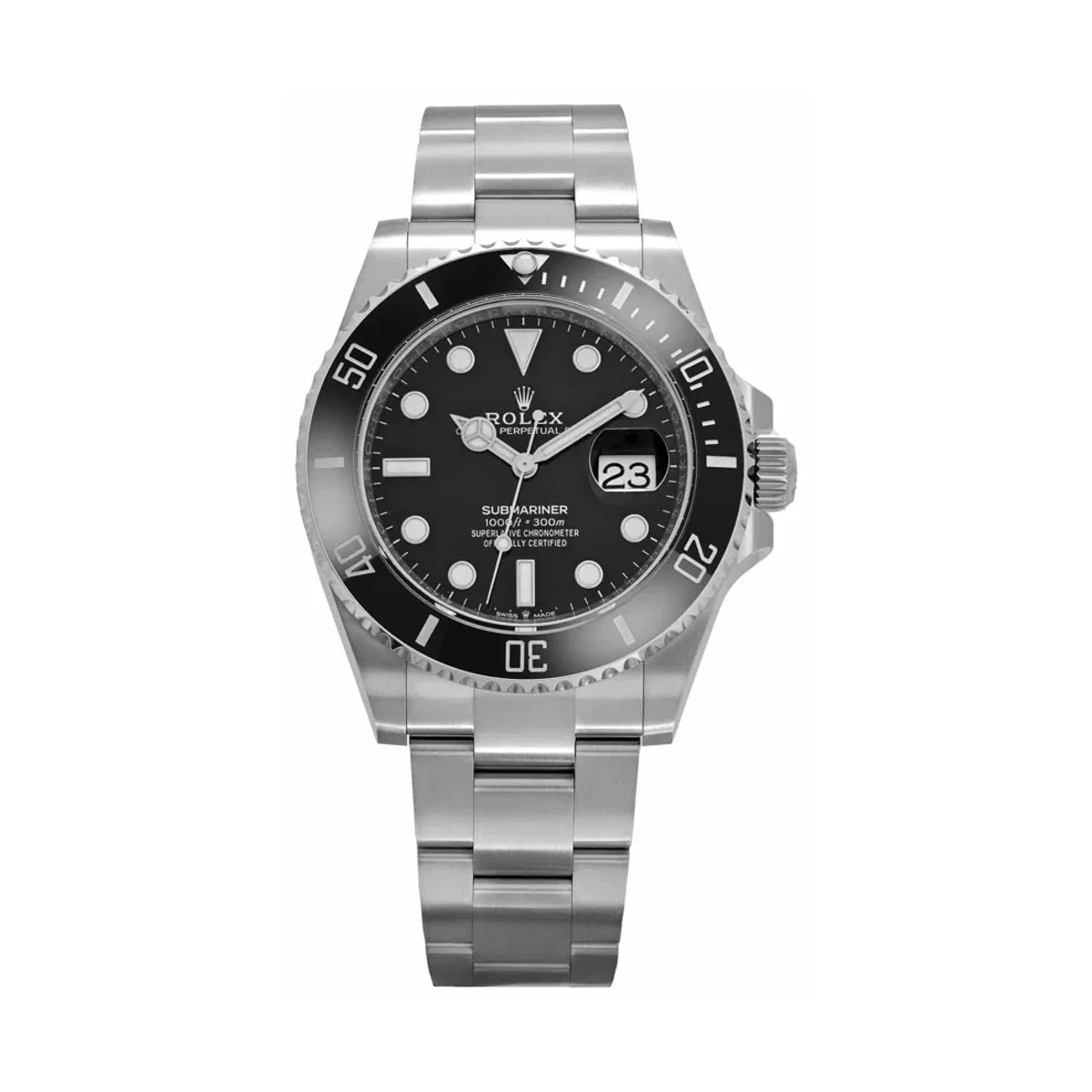
Pricing that sits significantly below market, a Submariner at $7,800 when clean comps are at $10,500, is almost never a deal. It's a signal. Real sellers don't leave $2,700 on the table by accident. Either the watch has issues, or it isn't what it's claimed to be.
Be specifically skeptical of listings that lean heavily on "box and papers" but provide minimal photos of the watch itself. Papers do not authenticate a watch. A sophisticated fake can be paired with genuine paperwork sourced separately. Treat B&P as a nice-to-have, not as authentication.
The Weight Test is Mostly Dead
You'll read everywhere that a fake watch feels light. That was true in 2015. Modern high-end replicas are built with solid 316L stainless steel at correct specifications. A genuine Submariner with bracelet weighs approximately 155 grams, and a convincing replica will land within 5 grams of that. Don't dismiss a watch based on weight, and don't trust a watch based on it either.
Rolex: What Still Works
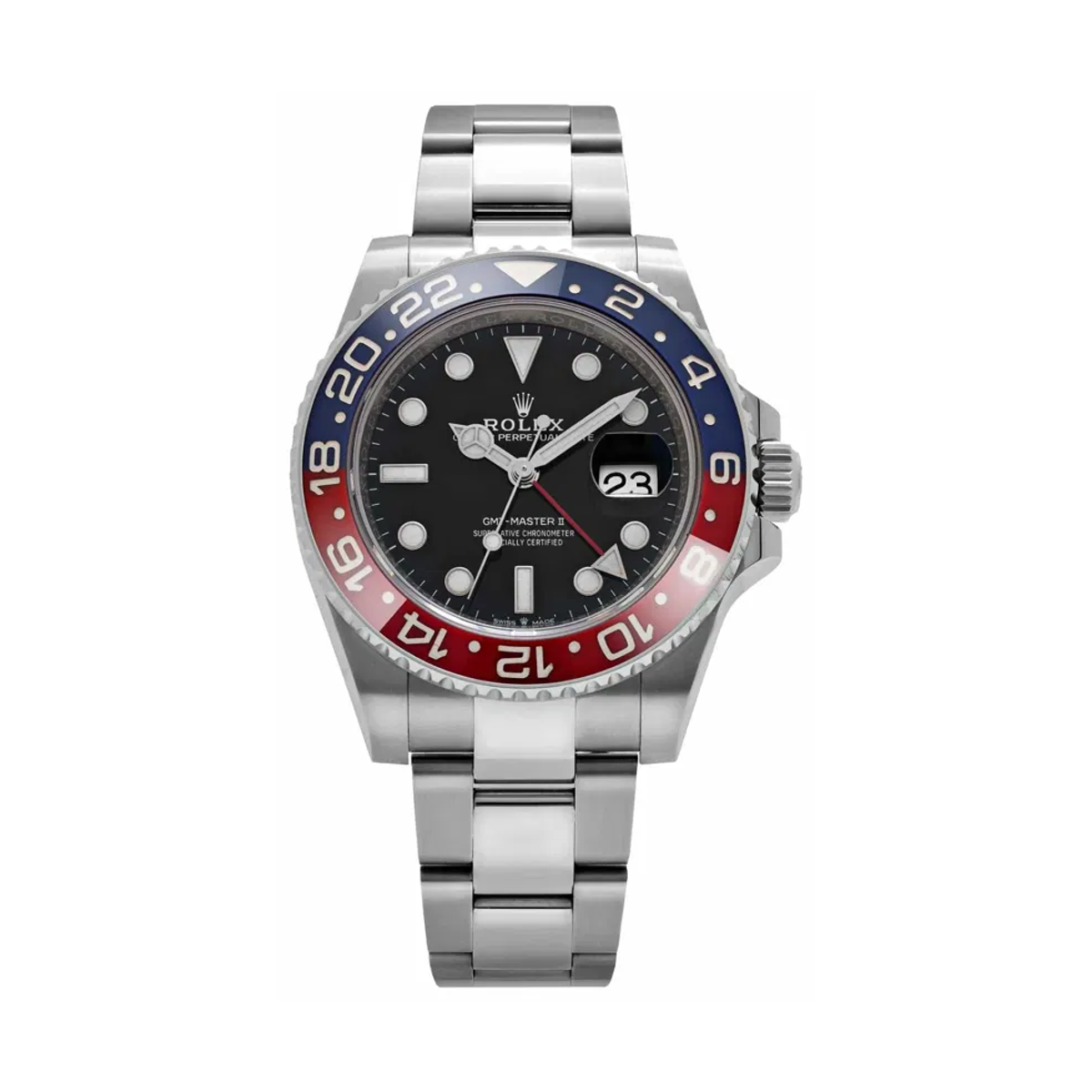
The rehaut (the inner bezel ring between the dial edge and the crystal) on post-2002 Rolex watches is laser-engraved with "ROLEX" repeated around the circumference and the serial number at the 6 o'clock position. This engraving is extremely fine, you need a 10x loupe to read it clearly. Replicas either omit it entirely or apply it with slightly wrong font weight, incorrect character spacing, or inconsistent depth. This is one check that still catches a high percentage of fakes because the precision required to replicate it correctly at cost is significant.
The movement sweep is another reliable check. A genuine Rolex Cal. 3235 beats at 28,800 vph, the second hand appears to glide in a smooth continuous motion. Even a high-quality replica running a Miyota 9015 or ETA 2824 beats at a noticeably different cadence under direct comparison. A ticking second hand, any visible stepping, is an immediate disqualifier.
The triplock crown on current-generation Rolex Professional models has three dots stamped into the face of the crown. Two dots, or an unmarked crown, means non-original.
Omega: The Caseback Problem
Omega's caseback medallion on the Seamaster 300M is one of the most frequently faked details in the market. The hippocampus (seahorse) medallion should be a precisely cast three-dimensional piece with individual visible scales, sharp edge definition, and consistent relief depth. Fake medallions look reasonable from 18 inches away and fall apart under a loupe, the scales become blobs, the edge work loses definition, and the enamel fill (on authentic pieces) shows irregular pooling in replicas.
The helium escape valve on Professional 300M models is another tell. On genuine Omega examples, it's machined flush with the case, functions smoothly when depressed, and has correct laser markings. On many replicas it's a cosmetic press-fit dummy, tap the case near it and it rattles. That rattle disqualifies the watch.
Check the co-axial escapement rotor sound on Omega Cal. 8800 movements. The co-axial mechanism has a distinctive auditory signature, a subtle, slightly irregular tick compared to a standard lever escapement. Many replica movements running ETA or clone calibers have a different auditory character. This is harder to evaluate without handling multiple genuine examples first, but it's worth learning.
TAG Heuer: Dial Printing and Pushers
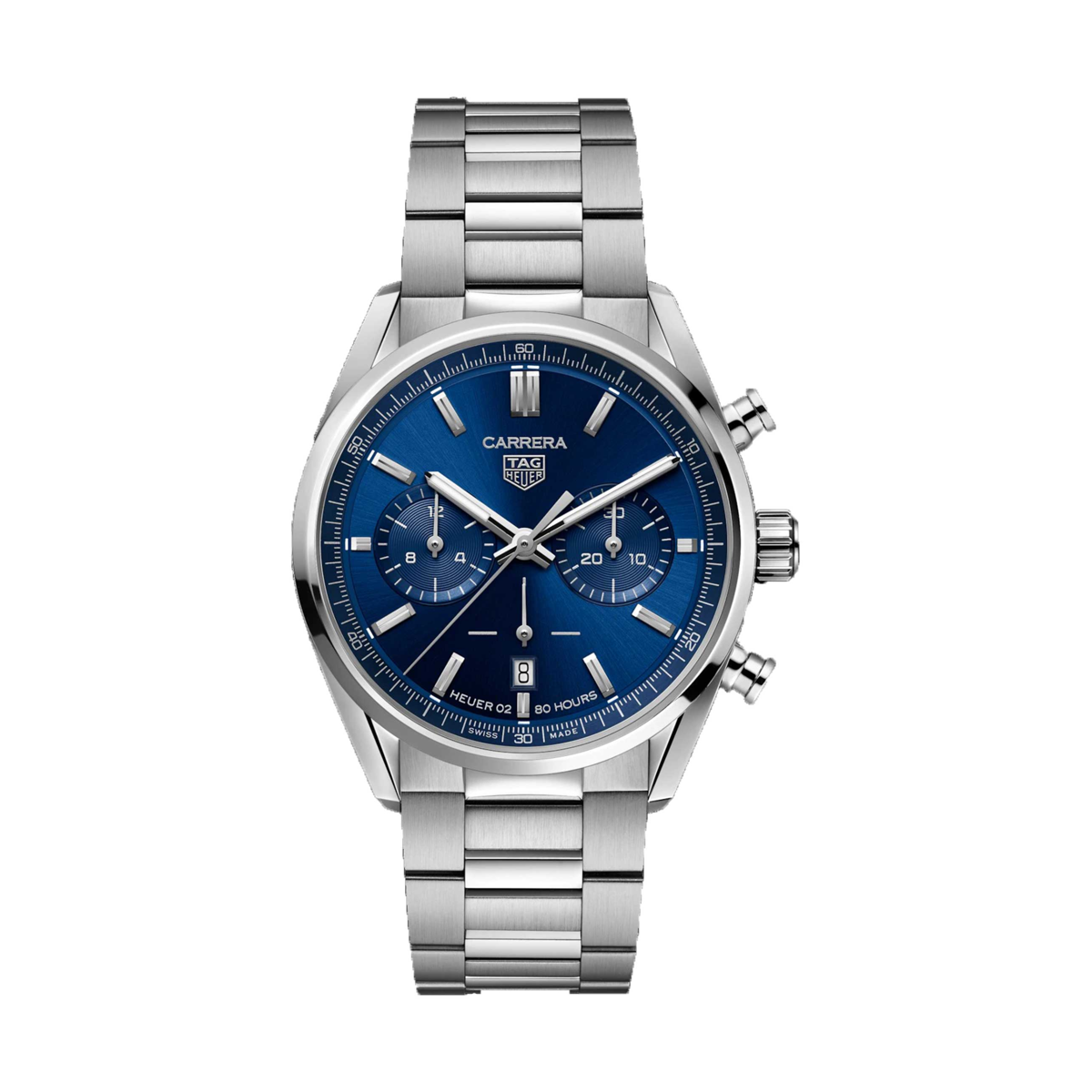
TAG Heuer Carrera chronograph dials, especially the racing-heritage variants with tachymeter scales and multi-register layouts, have extremely fine typography. The sub-dial text, scale markings, and "CARRERA" lettering on authentic pieces are printed at precision that shows up clearly under magnification. Fake examples show ink bleeding on fine strokes, inconsistent stroke width on the scale hash marks, and subtly wrong font geometry on the brand text.
The chronograph pushers are a reliable functional check. Authentic TAG Heuer pushers have a defined resistance point and a crisp, clean click return on both actuation and release. Sloppy pusher action, uneven resistance between the two pushers, or a mushy return often indicates a non-authentic movement with incorrect rocker geometry underneath. Actuate both pushers repeatedly, the feel should be identical and consistent.
The Superfake Problem
There exists a tier of replica, often called "superfakes" or "1:1 replicas" in the grey market, produced to near-specification tolerances with correct-weight steel, properly printed dials, and in some cases genuine Swiss movements. These watches defeat visual inspection by non-experts, and in some cases, brief inspection by experienced hands. They're expensive to produce and consequently expensive to buy, not the $200 tourist garbage, but $800 to $1,500 pieces explicitly targeting the authentication gap.
For any watch purchase over $4,000 to $5,000 where you have any doubt, the answer is third-party authentication. Watchfacts and WatchCSA both offer fast turnarounds. The cost is $30 to $75 depending on the service level. On a $9,000 purchase, this is not optional, it's basic risk management.
If the deal feels too good, it almost certainly is. The secondary watch market is efficient. Genuine deals exist, but they're small, $200 to $500 under clean market comps. Not $3,000 under.
The Bottom Line
Buy from sources with verifiable authentication processes. Demand detail photos before committing. Use a loupe, a decent 10x loupe costs $15 on Amazon and eliminates a majority of fakes in under two minutes. And for high-dollar purchases, pay for third-party authentication. The market for convincing fakes is real and growing. The tools to protect yourself are cheap and readily available. Use them.